
How To Start Your Baby On Solid Foods
Step one: Stock up on burp cloths, bowls, and baby spoons. Especially the burp cloths. We recommend our BAILY Burp Cloths! If you think you have enough, look at your drooling beauty right now and think again. It’s going to take a few months (fine, years) for baby’s table manners to set in, but handing them a spoon to hold now while they watch you feed them with another spoon sets you both up for success—or something approximating it.
When the training gets tough, and you’re the one who wants to start throwing food, remind yourself that you’re not just transitioning your baby to solids, you’re prepping for a lifetime of meals around the table with friends and family. When it’s time to start your baby on solid foods, don’t be afraid to return to a food your baby isn’t thrilled about the first time—those tiny taste buds aren’t used to the excitement of mushed avocado or mashed up yams yet. And those taste buds are changing every day, so it may take a few tries to get them fired up about a new flavor.

So, When Do We Start?
Until the big six-month birthday, breast milk and/or formula is all the nutrition your snuggle muffin will need. Somewhere around four to six months, however, those tiny tongues learn to push what’s in their mouth toward the back (to be swallowed) rather than only the front (to ruin your silk shirt). In other words, they’re prepping for the big leagues! Or at least mushy peas!
5 Signs It’s Time to Start Your Baby on Solid Foods
Your baby can’t ask for mashed banana yet, but when they’re ready to start expanding their petite palate, there will be signs:
- Holding their head up
- Sitting up quasi-independently
- Leaning toward or acting interested in your food
- Putting hands or toys in their mouths (or trying to, at least)
- Letting you know when they are full or finished eating
If your baby genius has these five key life skills handled, they’re likely ready to start solids. Of course, always talk to your pediatrician first, and maintain your regular breast milk or formula schedule while you transition to solid foods.
Introducing Solid Foods to Baby
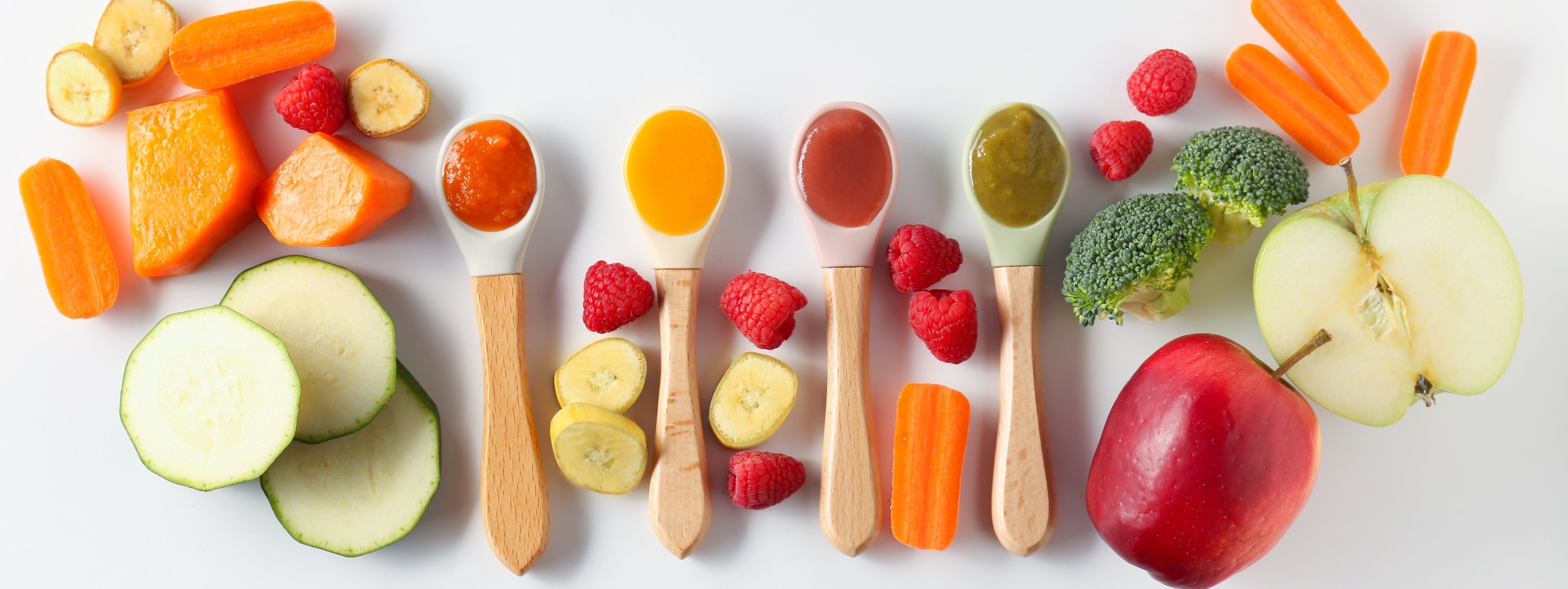
Start with simple, single-ingredient solid foods. Entry into solids is simple and lets you off the hook as a chef. Introduce one solid food at a time: Single-ingredient purees with no salt or sugar added and single-grain cereals made with breast milk or formula make a great starting point, as well as Stage 1 store-bought baby food. Stick with the same food (plus your regularly scheduled breast milk or formula program) for three to five days before adding anything new to the menu. This will ensure that if your baby has a bad or allergic reaction, you will know immediately what is causing it.
First Foods For Baby (AKA Baby’s First Puree)
- Bananas
- Avocados
- Applesauce
- Butternut Squash
- Sweet Potatoes
- Pumpkin
- Carrots
- Peas
- Pears
Mash soft foods, like bananas and avocados, and cook and puree firm foods, like squash and carrots. Once the food is nice and mushy, all your favorite fruits and vegetables are fair game. Remember: you’re training this baby to be your future dinner date.
Single-Grain Cereals To Try:
- Quinoa
- Buckwheat
- Farro
- Oat
- Barley
- Amaranth
- Bulgur
- Multigrain Blends
We know: You’re looking for rice on the list. Rice is a traditional cereal base for starting solids, but it’s important to note that rice and brown rice—even organic options—contain higher levels of arsenic. Which is not to say rice cereal isn’t a good option, you may just want to consider mixing it up with other grains, too. Whatever grain you land on, be sure to cook thoroughly and puree with breast milk or formula for silky-smooth texture. If it looks disgusting to you, it’s perfect!
What About Yogurt?
Yogurt is safe to add to your baby’s new menu starting at six months, as long as it is pasteurized and unsweetened. But save cow’s milk until your baby hits the 12-month mark. Yogurt is also rich in calcium, vitamin D, and protein, and conveniently requires no mashing or pureeing. Adding a probiotic-packed yogurt formulated for baby bellies is also an easy way to support your little gourmand’s gut health. Look for options like Stonyfield Organic YoBaby yogurt that use probiotic BB-12®, a strain known to reduce gas. As with any new food, keep an eye out for tummy trouble or allergic reactions, but otherwise consider yogurt your baby’s first foray into popular culture.
What Foods to Avoid for Babies:
- Honey
- Cow’s Milk (but yogurt made with cow’s milk is great)
- Anything your pediatrician restricts based on your baby’s needs
- Juice (it’s high in sugar)
When you’ve moved beyond purees, the next step is teeny, tiny cut up pieces of whatever you want them to enjoy. Once your baby has mastered mashed up fruits and vegetables, experts advise expanding their palate to actually reduce the risk of allergies, according to The Mayo Clinic.
The Surprising Yes List (For Later) :
- Peanuts
- Tree nuts
- Eggs
- Dairy products such as cheese and yogurt.
- Wheat
- Shellfish such as shrimp and crab
- Fish
- Soy
- Sesame
The world is your oyster—although, we’d recommend waiting about a decade to pass them one.